The Elephant Who Cut Off His Own Tusks: A Buddhist Story About the Grudge You've Been Feeding
A 2,000-year-old Buddhist story about a grudge that outlived a lifetime, and what it quietly asks of anyone still carrying an old wound.
There is a story the old people in my country tell, and it begins with a gust of wind.
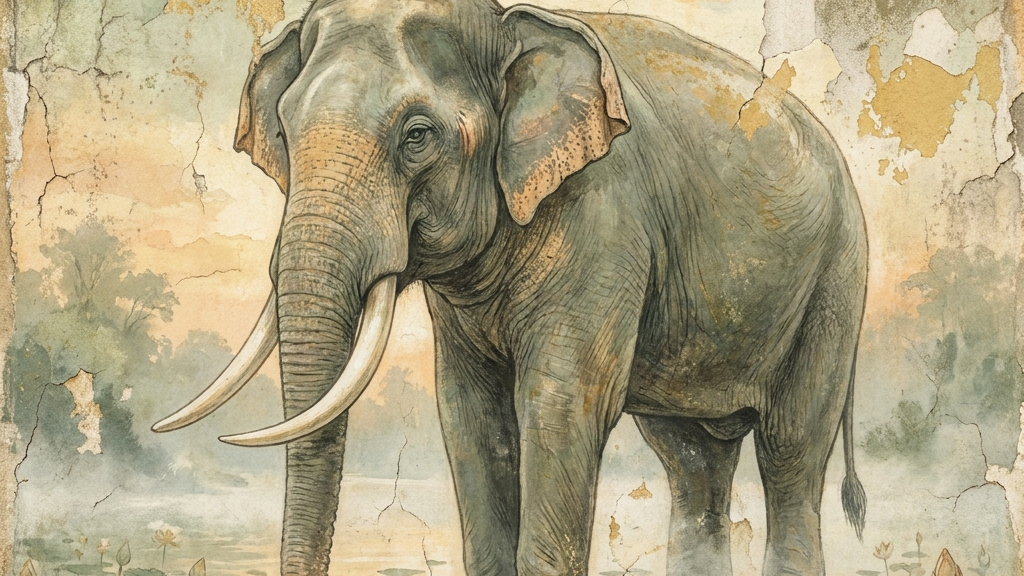
In the forests below the Himalayas lived a herd of eight thousand elephants. Their leader was Chaddanta, the Six-Tusked: a head taller than the rest, his hide the color of storm clouds, six great tusks curving from his jaw that caught the morning light and broke it into colors nobody could name. They followed him not out of fear. His calm made the forest feel safe.
He had two wives, Mahasubhadda and Cullasubhadda, and he loved them both with the even, patient love of a great heart. Such love is not always understood by those who receive it.
One morning he brushed his shoulder against a sal tree heavy with blossom, and white flowers came down like snow. The breeze carried nearly all of them onto Mahasubhadda, standing upwind. Cullasubhadda, downwind, got dry twigs, an old wasp's nest, and a few red ants that bit her ear.
She said nothing. But something cold settled in her that day and did not leave.
Later the herd came to a lake where lotuses of seven colors bloomed. A young bull pulled the finest from the water and laid it before Chaddanta, who passed it to Mahasubhadda. Cullasubhadda watched, and the cold thing inside her began to burn.
He favored neither. But a grudge eats whatever you feed it and is never full.
She stopped eating. She grew thin, and one morning the herd found her lying still beneath the trees.
In these stories death is not an ending but a turning of the page. She was born again in Benares and grew into a woman of such grace that the king made her his chief queen. She had forgotten the forest, the lotus, the wind in the sal tree. But the grudge had not forgotten her. It crossed the border of death the way a scent stays in cloth, and one night it surfaced in a dream so vivid she woke weeping.
In the morning she would not get out of bed. She told the king she was sick with a longing that would kill her if it went unanswered. "I dreamed of an elephant with six tusks. I must have those tusks or I cannot live."
To the hardest hunter in the kingdom, a man named Sonuttara, she gave directions she should not have been able to give: north, and north again, past seven mountains, to a lake ringed with banyan trees. "You will find him there. Do not fail me."
The walk took seven years, seven months, and seven days. At the end of it Sonuttara reached the lake, and there in the shallows stood Chaddanta, water sliding off his shoulders like silver. The hunter dug a pit on the path the elephant walked at dawn and waited beneath it with a poisoned arrow. When Chaddanta passed, the arrow went up through the leaves and into his side.
He trumpeted, and the sound bent the trees. His first instinct was to crush whatever had done this, and one foot would have been enough. He found the man crouching in the earth, lifted him into the air, and held him there.
And then he stopped.
"Why," he asked, and his voice was almost gentle, "have you wounded someone who never harmed you? Whose work is this?"
Shaking, the hunter told him everything. The queen. The dream. The tusks.
Chaddanta set him back down. What rose in him was not rage but a quiet sorrow. He understood who that queen had once been. He was dying because of a wound he had given without ever knowing he gave it, a wound carried and fed and sharpened across a lifetime until it became a blade.
"Then take what you came for," he said. "I don't blame you. You are only the arrow. The bow was bent long ago, in a grief I didn't know how to heal."
But the hunter's saw was small and the tusks thick as tree roots. He hacked and could not get through. Blood ran into the water. Seeing the man's hands shaking, Chaddanta knelt, took the saw in his own trunk, and drew it back and forth himself until the six tusks came away. He laid them in the hunter's arms.
"Carry these to her," he said, "and tell her I gave them without hatred. I hope they bring her the peace she couldn't find while she was near me."
He lay down in the shallows, and the forest went quiet.
The queen got her tusks. They were brought to her on a cloth, and she heard what the hunter had been told to say. The grudge she had carried across two lifetimes stood face to face with what it had destroyed, and could not survive the meeting. She did not live long after.
Where this story comes from
This is the Chaddanta Jataka, one of the Jataka tales, the stories the tradition tells of the Buddha's previous lives. Long before he was the Buddha, it is said, he was born again and again in many forms, animal and human, ripening the qualities that would one day flower into awakening. Here he is the elephant, and what he practices is khanti, patient forbearance, and its harder cousin, forgiveness.
In Thailand these stories are not academic. They are painted on the inside walls of temples, so a child sitting on the cool tiles through a long sermon can look up, see the elephant and the hunter and the pit, and understand it all before he can read a word. Monks retell them on the moon days. Grandmothers use them as shorthand. Don't be like that queen.
What it asks of you
Most of us carry some version of Cullasubhadda's grudge: a slight that landed long ago and that we have quietly fed ever since.
Look how little it took. A gust of wind. A flower handed to someone else. The poisoned arrow, the ruin of two lives, all of it grows out of a meaning she assigned to something that had no meaning in it at all. He was not choosing the other wife over her. The wind was blowing that way. And we do this constantly. Your brother forgets to call, your boss praises somebody else in the meeting, an old friend goes quiet, and each time the mind supplies a story, nearly always the same story. I don't matter to them. Then we rehearse it. We sharpen it. And over the years the grievance quietly becomes part of who we think we are, while the other person feels nothing at all. The wind blew and they walked on. You are the only one still standing under that tree.
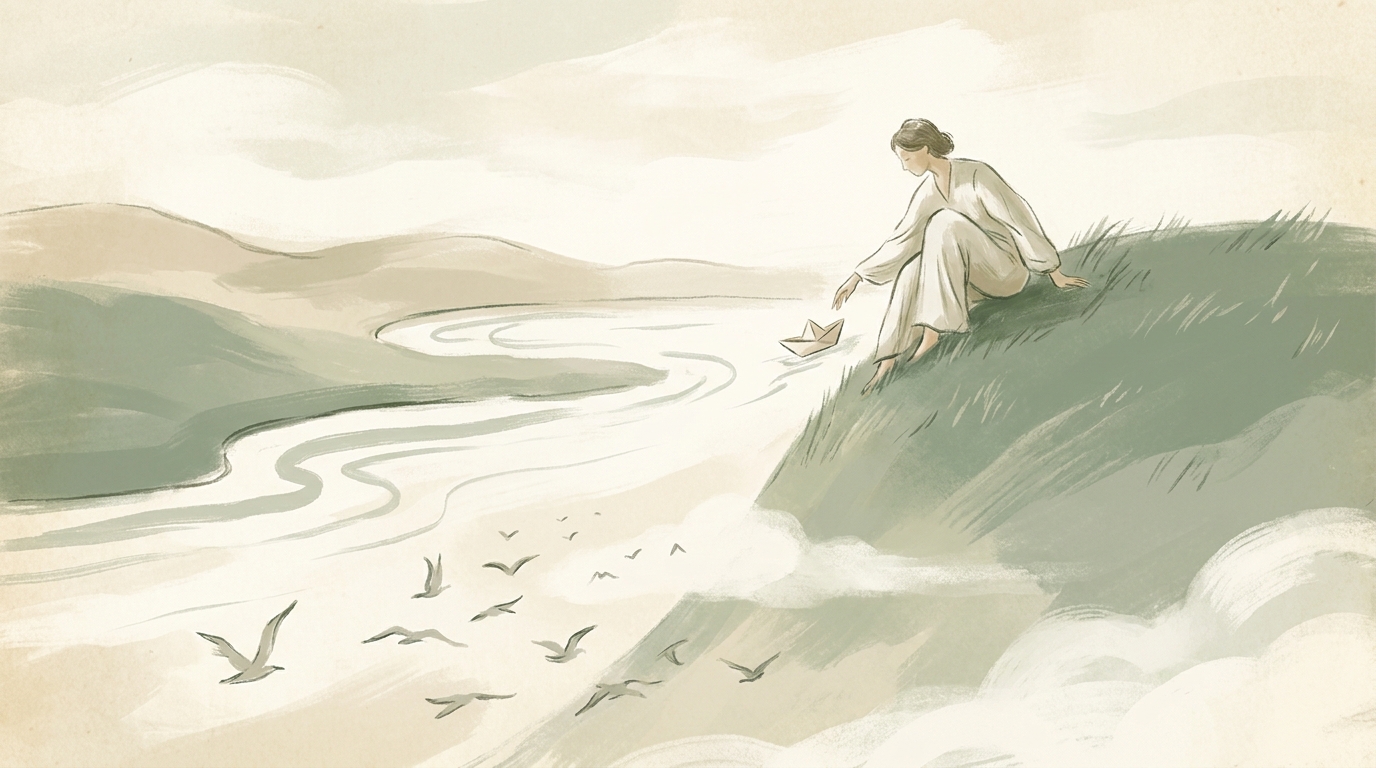
Notice what Chaddanta does not do. He does not pretend the arrow was fine. The wound was real and it killed him. He only refuses to add hatred to it. That is what we keep missing about letting go. It is not a pardon. It is a decision not to hand the harm the rest of you as well. And there is his line to the hunter, which I have thought about for years. You are only the arrow. The bow was bent long ago. Almost everyone who wounds you is carrying their own bent bow, some old unhealed thing handed down by someone who came before. Seeing that does not excuse them. It shrinks them back to human size, which is the only size you can put down.
One small thing to do with this story. Think of a grudge you carry, a real one with a name attached. Write down the meaning you gave to what they did. She ignored me because I don't matter to her. Underneath it, write one other explanation. She was overwhelmed and forgot. You don't have to believe the second sentence. You only have to admit it is possible.
That crack is where the grip of a grudge begins to loosen. Cullasubhadda never found it. She had a lifetime, and then another, and never once considered that the wind was simply blowing that way.
You still have time to consider it.
I am Tanapanyo (Thanasak Wahawisan). I write from Thailand, where I have practised and studied the dhamma for most of my life, for people in the West who are tired in a way sleep does not fix. My books take the older teachings and put them somewhere useful, which is to say Tuesday night, in your own head, when nobody is watching.