Why Do I Keep Reliving Embarrassing Moments?
If old embarrassing memories keep resurfacing at 2 a.m. or in quiet moments, it's not a flaw - it's an old social alarm still trying to protect you. Here's why it happens, plus a one-minute practice to gently interrupt the loop and hold your past self with more kindness.
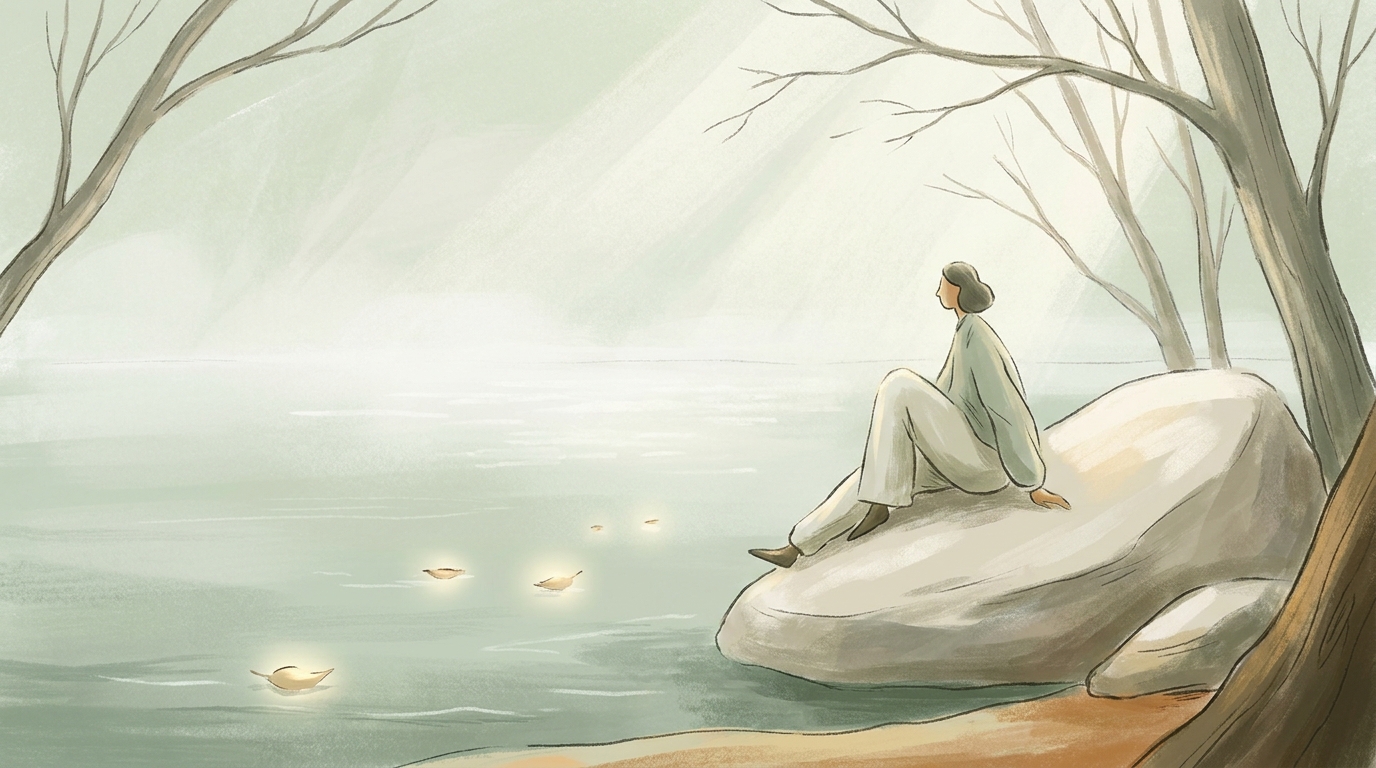
It's the middle of the night, or you're standing in line at the grocery store, and out of nowhere it surfaces: something you said years ago, a joke that fell flat, the time you tripped in front of everyone, an email you shouldn't have sent. Your chest tightens. Your face gets hot, even though there's nobody around to see it now. You wonder why you're the only one who still remembers - and why your mind won't just let it go.
If this happens to you, you are not broken, and you are not alone. Most people who describe themselves as overthinkers know this exact feeling: a small, old moment that keeps knocking on the door of an otherwise ordinary day. The mind has a habit of replaying old embarrassments long after the moment has passed. Once you understand why it does this, the loop loses some of its grip.
Why the Mind Keeps Hitting Replay
Embarrassment is a social signal. Somewhere in our wiring, we learned that being seen badly by others - laughed at, judged, excluded - once meant real danger. Long ago, being cast out of the group could threaten your survival. So the brain treats social missteps a little like it treats physical threats: worth remembering, worth avoiding next time.
That's the key phrase: next time. Your mind isn't replaying the moment to punish you. It's replaying the moment because some part of it is still trying to rehearse a better ending, still trying to make sure this never happens again. The trouble is, the moment is already over. There is no "next time" to fix - only a memory being run through the same old groove, again and again, like a worn path in the grass that gets deeper each time you walk it.
In a gentler light, you could say the mind is simply practicing an old habit: grasping at a story and retelling it, mistaking the retelling for protection. It believes that if it holds on tightly enough, it can somehow undo what already happened. It can't. But the mind keeps trying anyway, because that's what an untrained mind does when it hasn't yet been shown another way to respond.
A One-Minute Practice: Naming the Loop
Here is something you can do the very next time an old embarrassing memory pulls you in.
Pause wherever you are. Take one slow breath in, and as you breathe out, say quietly to yourself: "This is an old memory. It is not happening now." That's it. One breath, one sentence.
If it helps, touch something near you - the edge of a table, your own hands, the fabric of your sleeve - and let that small sensation remind you where you actually are: not back in that room, not back at that moment, but here, now, safe. The memory can still visit. You are just no longer mistaking it for the present.
This isn't about forcing the thought away or telling yourself to stop thinking about it - that usually backfires and makes the thought louder. It's about gently relabeling what's happening: a thought is passing through, not a threat that's actually here. Do this enough times, in small ordinary moments, and it starts to become second nature - something your mind reaches for on its own, without you having to remember the steps.
Why It Feels So Much Bigger at 2 A.M.
Notice that these memories tend to surface when things go quiet - at night, in the shower, on a long drive. That's not a coincidence, and it's not a sign that something is wrong with you. A busy mind has plenty to hold its attention. A quiet mind has room, and old unfinished business tends to rise to fill it.
There's also a strange trick of memory: the version that replays is rarely the full, accurate scene. It's usually a tightened, exaggerated highlight reel - the worst three seconds, on loop, stripped of everything else that was happening around it. The people who were there likely remember it differently, if they remember it at all. Most people are far too occupied with their own inner highlight reels to be keeping score of yours. It only feels like the whole room is watching because, in your memory, you've made it the whole room.
Holding Your Past Self a Little More Gently
Underneath the replaying is often a quieter wish: to have done it differently, to not have been that person in that moment. But that person - the one who said the awkward thing, who tripped, who sent the email - was doing their best with what they knew and felt at the time. They didn't have the benefit of hindsight. None of us do, in the moment we're living it.
You can try picturing that past version of yourself the way you'd look at a good friend who came to you embarrassed about something small. You wouldn't pile on. You'd probably say something like, "That's really not as big as it feels right now." Try offering yourself that same sentence. It won't erase the memory, but it can soften the grip it has on you.
The mind replays what it hasn't yet made peace with. Each time you meet the memory with a little patience instead of dread, you're teaching it, slowly, that this old moment doesn't need defending anymore. It's already over. You're allowed to let it rest.
Want a gentle place to start? One Quiet Breath: How to Calm an Overthinking Mind is a free little book, yours to keep. Twelve short chapters, twelve tiny practices you can do in a single breath. Download it free here.