Sona's Lute: What Burnout Sounds Like When a String Is Too Tight
A monk nearly destroyed himself with effort, and the Buddha answered him with a question about music. The oldest and most practical teaching on burnout, and how to check your own pitch.
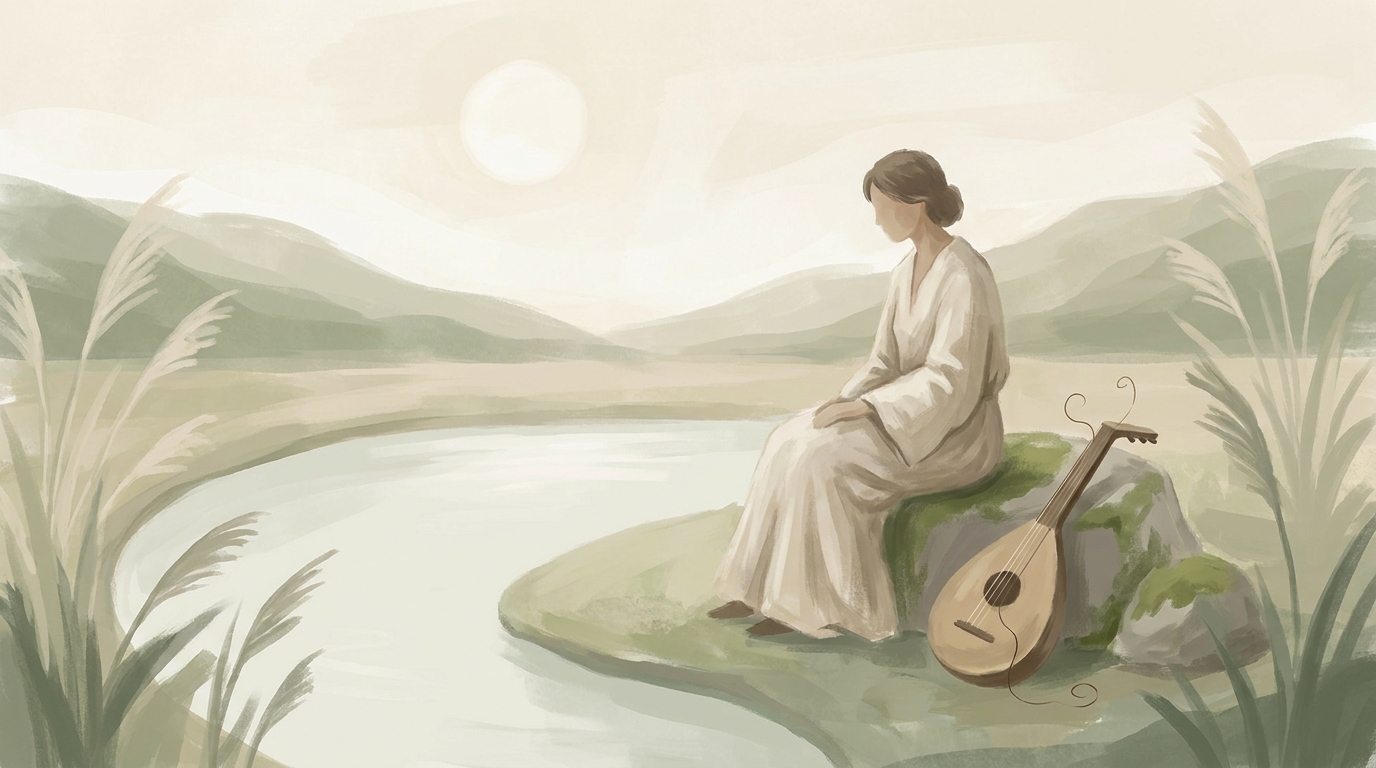
Before he was a monk, Sona was the kind of rich that gets talked about. The old texts, which enjoy this sort of detail, tell us he had been raised so delicately that fine hair grew on the soles of his feet — a young man so wealthy he had never really needed to walk anywhere on his own two legs.
Then he heard the Buddha teach, and it turned his life in a new direction, and he did what rich, driven, capable people usually do when they take up something that matters to them. He attacked it.
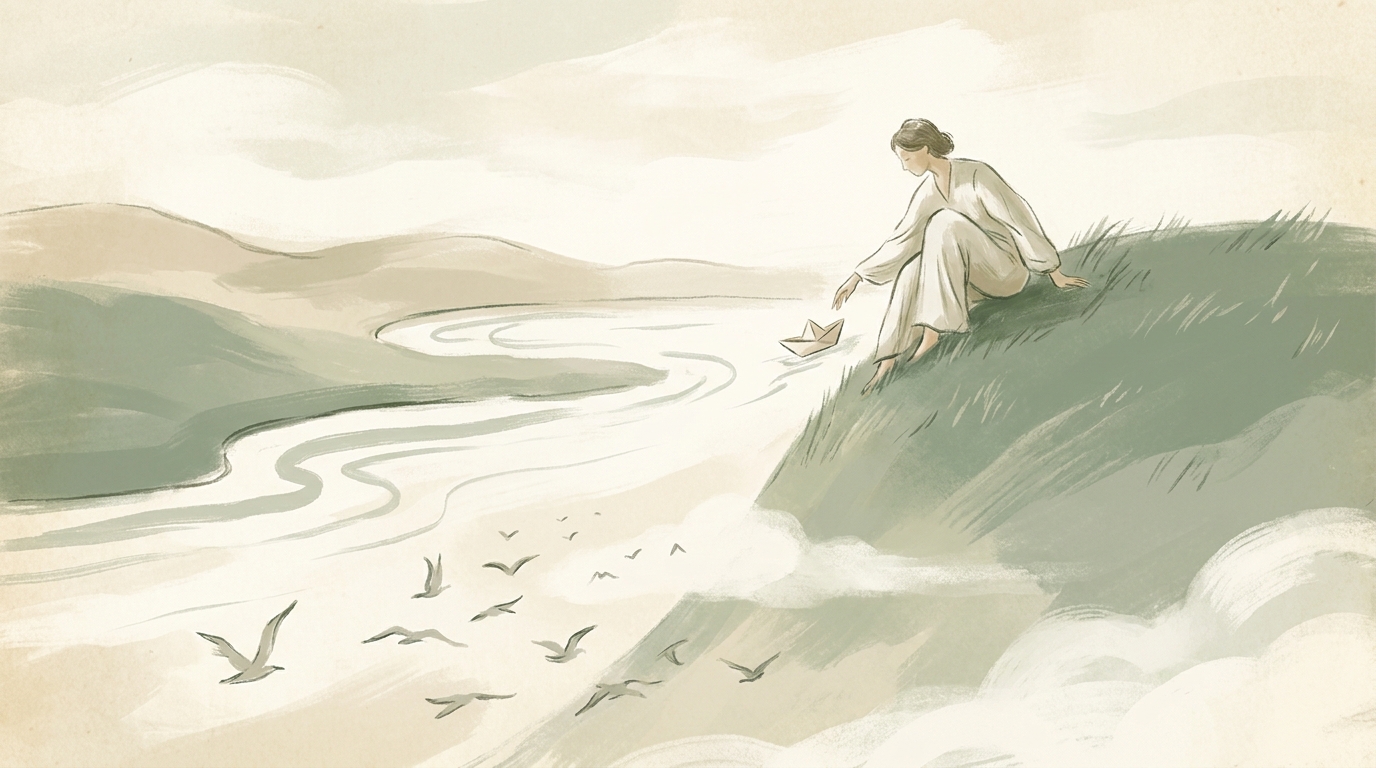
He chose walking meditation as his main practice — the man whose feet had never touched a road — and he walked. He walked until the soft feet blistered, and then split, and then bled, and the texts say his meditation path came to look like a butcher's floor. And after all of it — the discipline, the pain, the sheer volume of effort — nothing. No peace. No release. His mind was as restless as the day he began.
So one evening, alone, Sona had a thought that will sound familiar to anyone who has ever burned out on something they loved. Of all the Buddha's students, no one strives harder than I do. And I am getting nowhere. My family has money. Perhaps I should simply go home, live comfortably, give generously, and be done with all this.
The Buddha came to see him. And here is the part that interests me. He did not question Sona's sincerity. He did not tell him to try harder, and he did not tell him to rest — none of the advice a striver braces for. He asked him about music.
When you were a householder, Sona, you were skilled at the lute, weren't you? When its strings were wound too tight, did it play? No, teacher. And when they hung slack? No, teacher. But when they were neither too tight nor too loose, tuned just to pitch — then it played.
It is the same with effort, the Buddha told him. Wound too tight, energy tips over into restlessness — into strain that looks like dedication but is only pain with a schedule. Left too slack, it slumps into laziness. What he told Sona to find was not more effort, and not less effort, but the pitch of his effort. And Sona, retuned, went on to become the disciple the Buddha named foremost in energy. Sit with that for a moment. The man nearly destroyed by effort became the tradition's model of it — not because he finally pushed hard enough, but because he stopped confusing tension with music.
Two speeds
I think of Sona often, because most working people I hear from own exactly two speeds: flat out, and collapse.
Flat out is the week. Email before your feet find the floor. Lunch eaten in the glow of a screen. The day ending not when the work is done — it is never done — but when you physically cannot continue doing it. Collapse is what gets called rest: the weekend spent horizontal, scrolling, too depleted for the things you actually enjoy, faintly guilty the whole time. A string overtightened for five days, then dropped slack for two. Neither state makes music, and the quiet cruelty of the cycle is that both halves feel justified — the tightness proves you are serious, and the collapse feels like something you have earned. If your body clocks off on Friday while your mind keeps churning through Monday, that tired-but-wired state is the sound of a string that no longer knows how to be anything but tight.
And underneath the schedule there is usually a sentence, and the sentence deserves a closer look, because it is the deepest knot in the string. Sona's effort had become his identity. Of all the disciples, no one strives harder than I do. Notice that even at his lowest point, that is how he introduces himself to himself. Not: I am learning. Not: I want peace. But: I am the one who works hardest. Many of us are running some version of that sentence. The overwork was never really about the deadline. It is about remaining the kind of person who overworks, because somewhere along the way that stopped being a thing we do and became the thing we are. This is why simply deciding to slow down so rarely survives contact with a Tuesday. You are not adjusting a calendar. You are renegotiating a name.
Tuning is not a decision you make once
Here is what the lute image gets exactly right, and what most advice about balance gets wrong. A musician does not tune an instrument once and consider the matter settled for the year. Strings drift. The weather changes them; the playing itself changes them. A player tunes before the performance, and between pieces, and sometimes mid-song, one ear always slightly cocked toward the pitch. Tuning is not an event. It is a relationship.
So the practice I would offer is not a new productivity system, and heaven knows it is not another morning routine. It is a pitch check. Two or three times a day — stepping out the door, before lunch, waiting for the kettle — one breath, and one question: too tight, or too slack? You will usually know instantly; the body keeps honest accounts. The jaw, the shoulders, the speed of your typing, how you set down a cup — these are your strings.
Then the adjustment, and this is the part that matters: a musician turning a peg moves it a few degrees, not a full rotation. If you find yourself too tight, you do not need to book a silent retreat. Slow your walk to the next meeting by a tenth. Finish the sentence you are writing before answering the person at your shoulder. Let the kettle finish boiling without picking up your phone. If you find yourself slack — and burnout's slackness wears clever disguises: research, reorganizing, one more coffee first — you do not need a five-year plan. Choose one clear thing and do it before lunch. Small turns, made often, keep an instrument in tune for a lifetime. Grand retunings once a year keep nothing.
It has always comforted me that the Buddha did not learn this from a book either. Before his awakening he spent six years as the most extreme of ascetics, eating almost nothing, wearing his body down to a ladder of ribs — the tightest string in India. The middle way was not handed to him; it was what remained after he had personally snapped every string he owned. So when he stood at the end of Sona's bloodstained walking path, he was looking at his own younger self. The teacher of balance got there by breaking. Most of us do. The only invitation in this story is to notice sooner than he did.
And when the day is over and the mind is still tightening string after string about tomorrow, set tomorrow's worries down before bed. The instrument will play again in the morning. It does not need to be gripped all night.
I am Tanapanyo (Thanasak Wahawisan). I write from Thailand, where I have practised and studied the dhamma for most of my life, for people in the West who are tired in a way sleep does not fix. Sona's lute is one of the stories at the heart of Buddha & Business, a book about the older, calmer principles hiding inside good work — written for people whose job has quietly become the tightest string they own.