The Man Who Walked 120 Leagues for Thirty Words
Bahiya was admired as a holy man by an entire town, and it was the one thing standing in his way. The story behind the shortest teaching in the Pali texts, and what beginner's mind actually costs.
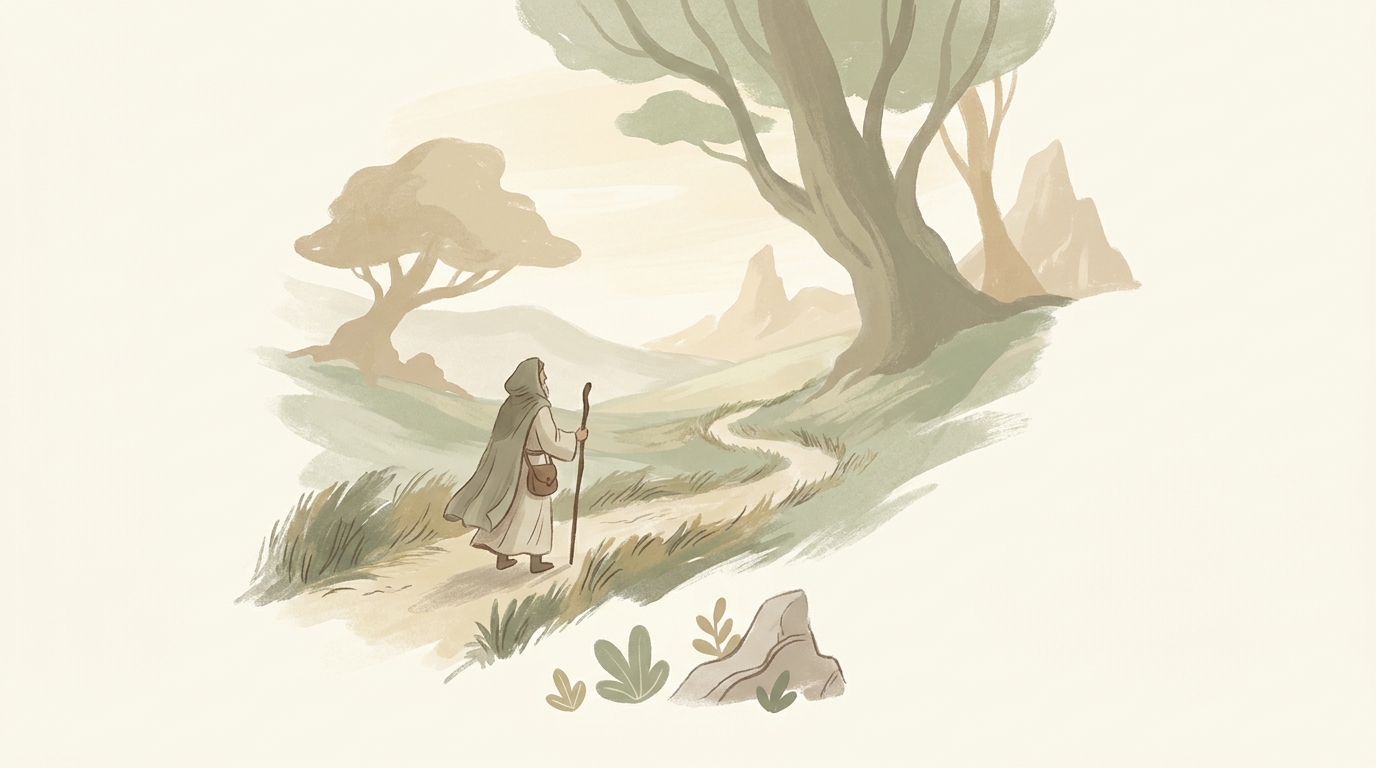
The most famous instruction in the Pali texts is about thirty words long, and the man it was given to was, by every outward measure, the last person who needed it.
His name was Bahiya. He had been a merchant, and the story says his ship went down off the coast, and he came ashore with nothing at all — no clothes, no cargo, no name in that place. He tied bark to himself for decency and walked inland, and the people of the town he reached looked at this gaunt, silent, half-naked figure and drew the obvious conclusion. Here was a holy man. Here was someone who had renounced everything.
They fed him. They bowed. They brought their questions and their sick children. And Bahiya, who had renounced nothing and merely lost everything, let them. Why not? It was a living, and a comfortable one, and after enough years of being treated as an awakened man he began to hold the thought himself: perhaps I am. Perhaps I really am one of those who has arrived.
What happened next is the part I find hardest and most useful. The texts say a spirit — an old friend from a previous life, in the way these stories work — came to him one night and said plainly: Bahiya, you are not awakened. You are not even on the path that leads there. There is a man in Savatthi who is.
A hundred and twenty leagues away, on the other side of India. And Bahiya, who had every reason to stay exactly where he was, admired and fed and never once contradicted, got up in the night and walked.
He does not ask to be taught. He asks twice more.
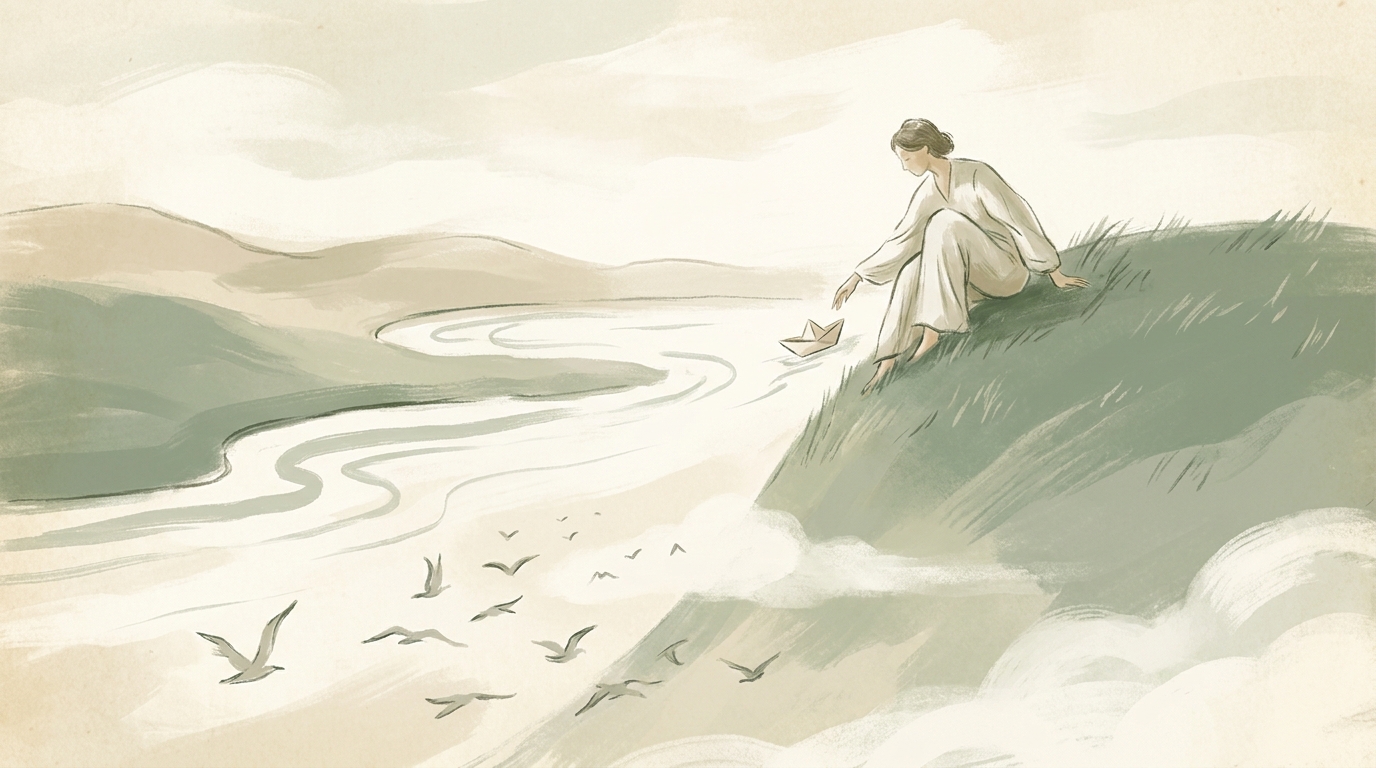
He arrived to find the Buddha out walking for alms, and did the thing that would be unthinkable to anyone protecting a reputation. He threw himself down in the street, in front of a whole town watching a stranger in bark, and asked to be taught.
And the Buddha said no. Not now, Bahiya. This is not the time; we are among the houses.
He asked again. Again the answer was no.
He asked a third time — and it is worth stopping to feel the humiliation of a third asking, in public, on your knees, having walked a hundred and twenty leagues on the word of a ghost — and the third time the Buddha turned and gave him this:
Then, Bahiya, you should train yourself thus: in the seen, there will be only the seen. In the heard, only the heard. In the sensed, only the sensed. In the cognized, only the cognized. When for you there is only the seen in the seen, only the heard in the heard, then, Bahiya, you will not be in terms of that. And when you are not in terms of that, you will not be there. And when you are not there, you are neither here nor beyond nor in between. This, just this, is the end of suffering.
Bahiya understood on the spot. The tradition says his mind was released right there in the road, faster than anyone's before or since. He walked on, and shortly afterward a cow with a young calf gored him, and he died. When the Buddha came upon the body he told the monks to build a stupa for it, because a fellow practitioner had passed, one who had gone all the way.
What the thirty words are actually doing
You can spend a lifetime on that instruction, and people have. But its plainest edge is this: between the seen and the sufferer there is a whole factory, and it runs so fast you have never noticed it start.
Something is seen — a face at a meeting that does not smile back. In the seen, there was only the seen: a face, a set of muscles, a moment of light. And then instantly, before you could be consulted, the factory adds. She is annoyed with me. It is because of what I said on Thursday. I always do this. I am the kind of person who does this. Now there is no longer a face. There is a case being built, with you as the defendant, from a single unsmiling second of a stranger's difficult morning. The pain is not in the seen. It is in everything added to the seen — which is also why the mind can chew on a moment for hours and never once get closer to the truth of it. It is not examining the event. It stopped touching the event a long time ago and is now examining its own additions.
And notice the last, strangest move of the instruction: you will not be in terms of that. The additions are not only about the world — they are the raw material of a self. The face that did not smile back is used, within a second, to build a small, aching statue of who you are. Take away the additions and there is a great deal less of that statue to defend.
But the story is really about the walk
Here is why I tell Bahiya's story to people starting out, and to people who have been at this for years and have quietly become experts in it.
The teaching he received takes thirty seconds to hear. What made him able to hear it was everything before: a man with a spotless reputation as a saint accepting, in one night, that he was not one. Walking away from the position that fed him. Kneeling in a foreign street. Being refused twice and asking a third time anyway, with the town looking on.
That is beginner's mind — shoshin, in the Zen phrase — and it is nothing like the fluffy thing the term has come to mean. It is not childlike wonder. It is the willingness to be publicly, expensively wrong about who you thought you were. Bahiya's obstacle was never a lack of information. It was that he had a self to protect, and it had a very good reputation, and reputations are heavy things to carry across a hundred and twenty leagues. He was, in a phrase I keep returning to, carrying a raft on his head long after the crossing was finished — except this raft was made of other people's admiration, which is the hardest material to set down.
And that is why the most capable people I know have the hardest time with practice. The competence that carried them is real. It is also the thing standing in the doorway. A person who already knows how to think their way out of every problem will, faced with a mind that will not settle, do the only thing they are expert at: think harder. Wind the string tighter. Read a fourth book. What the situation asks for is the one move the expert has no practice in — not knowing, for a minute, on purpose.
A minute of only the seen
So try this, once, today. It costs sixty seconds and no belief in anything.
Sit where you are and pick one thing in front of you — the edge of a table, a leaf, a mug. Look at it, and each time the mind adds a word, note it and come back to the thing. It will add. Chipped. Should replace that. Reminds me of the flat we had. Why am I doing this exercise. Every addition is the factory, visible at last. You are not trying to stop it — you could not, and the attempt is just more factory. You are only seeing, perhaps for the first time, how quickly the world in front of you is papered over with commentary.
Then, later in the day, when someone's tone lands wrong, you may catch a half-second gap you did not have before. In the heard, there was only the heard. A tone. A person having a day you know nothing about. The rest was yours, and being yours, it can be put down.
Bahiya walked a hundred and twenty leagues and knelt three times in the road for that gap. It is worth about a minute of yours.
I am Tanapanyo (Thanasak Wahawisan). I write from Thailand, where I have practised and studied the dhamma for most of my life, for people in the West who are tired in a way sleep does not fix. Bahiya's problem — the expertise that becomes the obstacle — is the subject of Shoshin, a short book about beginner's mind for people who are very good at what they do and have quietly stopped being able to learn.