The Raft You Are Still Carrying on Your Head
The Buddha compared his own teaching to a raft: built for crossing, not for carrying. A look at the old habits that once saved you and are now just weight on your head.
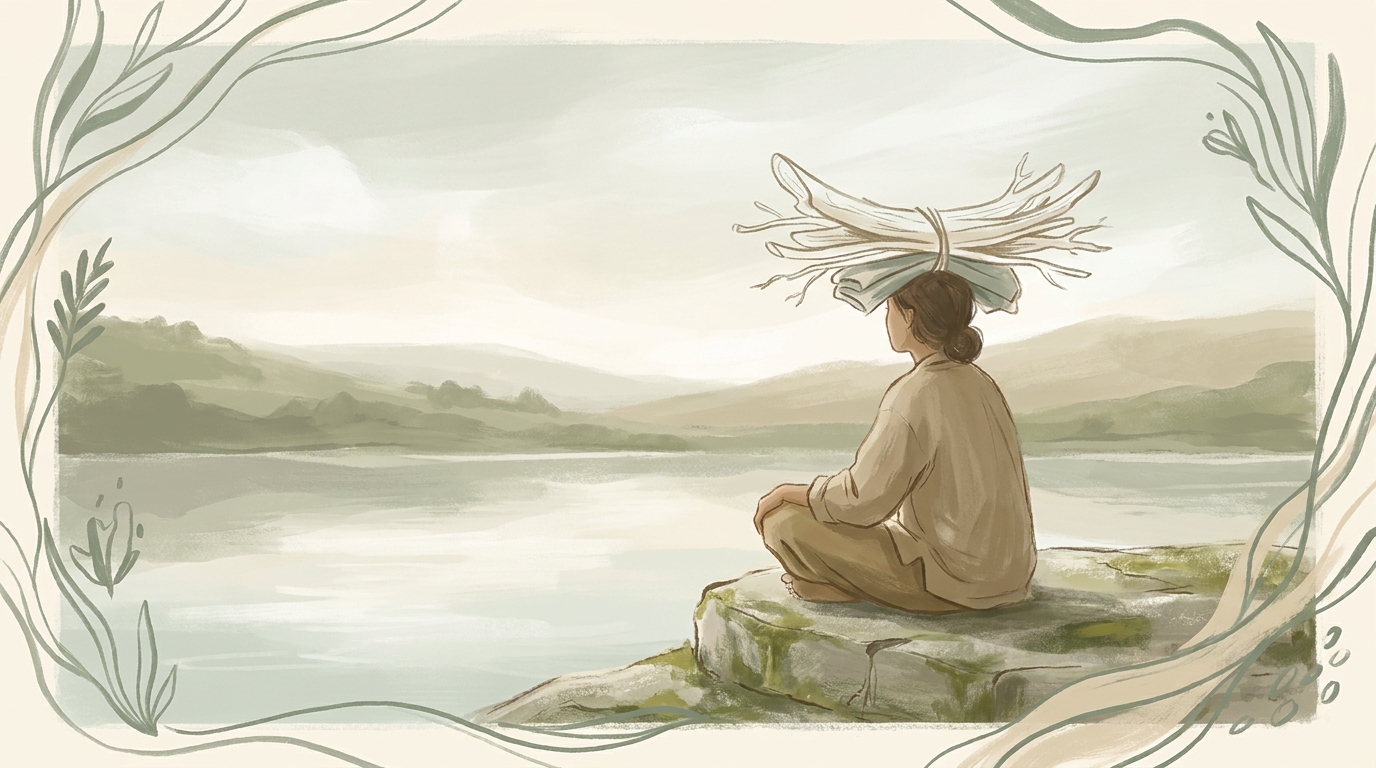
There is a question the Buddha once asked a group of monks, and on first hearing it sounds like a riddle you would tell a child.
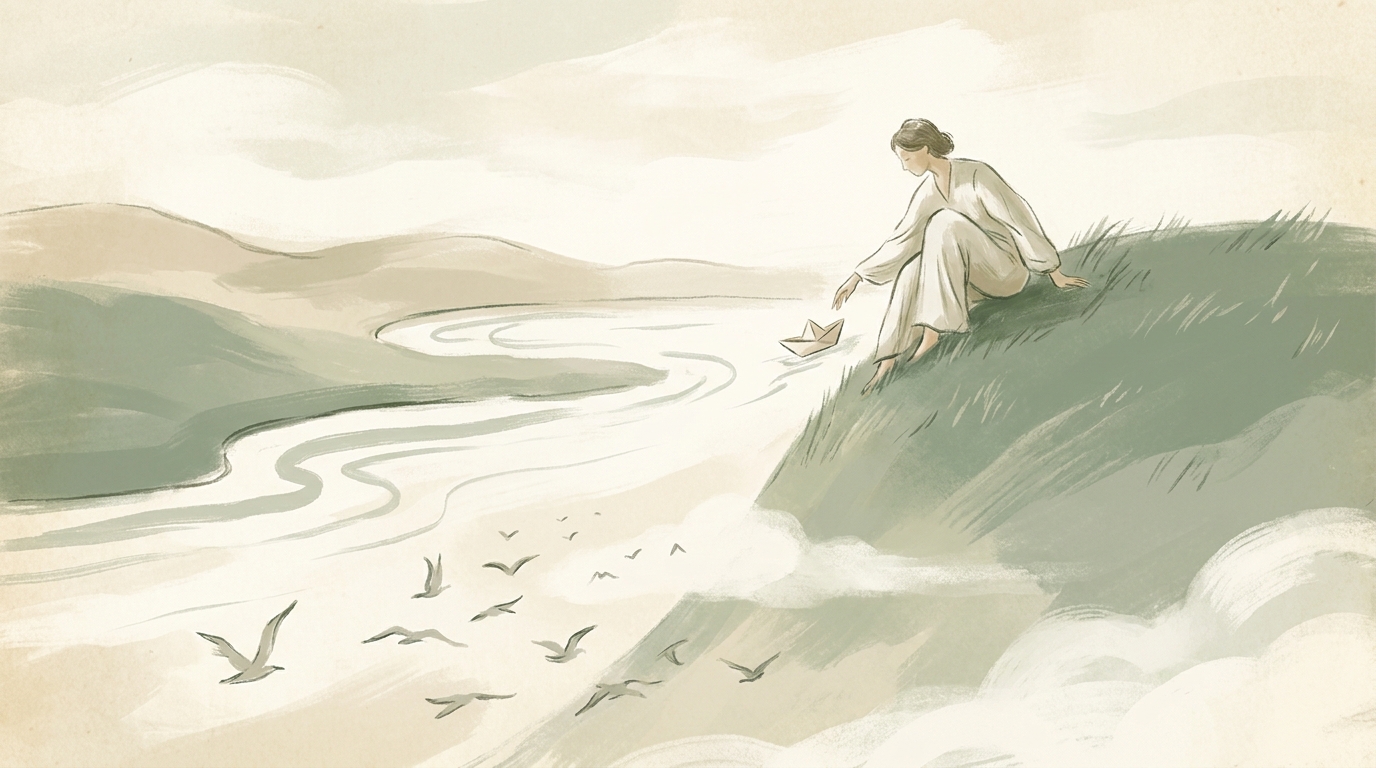
A man is walking a long road when he comes to a wide stretch of water. The shore he stands on is dangerous — the text calls it fearful, the kind of place you do not want to be standing at nightfall — and the far shore is safe. There is no bridge. There is no ferry. So the man gathers grass and twigs, branches and leaves, binds them into a raft, and lying across it, paddling with his hands and his feet, he gets himself over to the other side.
Then comes the question. Suppose, the Buddha said, the man stands up on the far shore, dripping and alive, and thinks: this raft has been so useful to me. I think I will hoist it onto my head and carry it with me wherever I go. Tell me — is that man doing the right thing with the raft?
The monks said no. Of course no. A child would say no. The sensible thing would be to drag it up onto the bank, or let it drift, and walk on with both hands free.
And then the Buddha said the line the whole story exists for. My teaching is like that raft, he told them. It is for crossing over. It is not for holding on to.
What saved you then is weighing on you now
Notice how far he went. He did not say your bad habits are like the raft, or your old opinions are like the raft. He said the dhamma — his own teaching, the most precious thing he had to give — is like the raft. Even that, he said, is a tool for getting somewhere, not an object to be balanced on your head for the rest of your life and defended from everyone you meet. I do not know of another founder of anything who spoke about his own teaching that way.
But the reason this story has followed me around for thirty years is not what it says about doctrine. It is what it says about all the other rafts.
Everyone I know is carrying one. The vigilance you learned in a house where the weather could change without warning — that was a raft, and it carried a child across water that was genuinely dangerous. The relentless work ethic that pulled you out of debt, or out of a town you needed to leave. The armor you put on after someone you trusted proved you should not have. The habit of needing no one, learned in the years when there was no one to need. The sharp tongue that kept the bullies at a distance. Every one of these was built the way the man in the story built his: quickly, out of whatever was at hand, because the water was real and the far shore mattered.
The problem is never that you built the raft. Building it was intelligence. Building it may be the reason you are alive. The problem is that the crossing ended years ago and the raft is still on your head. A raft on dry land is just weight. The vigilance now scans rooms that hold no threat, and calls it being realistic. The work ethic now cannot let you sit in a garden for twenty minutes without guilt. The armor now keeps out the one person patiently knocking on it. The thing is still doing its job. Its job is simply finished.
Is there still water under it?
A fair objection: some things that look like rafts are still in use. Not every caution is outdated, not every defense is obsolete, and the story is not an instruction to drop everything you have ever leaned on. Look at what the man actually does. He does not abandon the raft in the middle of the river. He leaves it at the shore, when the water is behind him.
So the question to ask is not should I let this go? That question starts a fight, and the raft always wins the fight, because it only has to say the word remember. The better question is quieter: is there still water under it? What is this habit protecting me from today — not in the year it was built, today? Sometimes the honest answer is: something real. Then keep the raft, with my blessing. And sometimes you look down and see that what you took for water is only the memory of water, and you have been paddling, arms aching, across an open field.
There is a second thing that keeps rafts on heads, and it deserves naming, because it is tender. Carrying the raft can feel like loyalty. That vigilance, that armor — they are souvenirs of the person you had to become to survive, and putting them down can feel like abandoning them: the younger you who lashed those branches together with shaking hands. If that is what holds you, consider this. The purpose of a raft is to be left behind. Leaving it is not a betrayal of the builder; it is the builder's work, completed. That child was building it precisely so that one day you could walk away from the river.
Grudges, I should add, are rafts of a particularly durable design, because they are walls built at the exact spot where you were once hurt, and a wall always feels like safety long after it has become a cell. I have written elsewhere about a queen who carried one across two entire lifetimes, and what it cost her. The short version is that the wall outlived the war. Walls tend to.
One minute at the water's edge
Here is the only practice this story asks of you, and it takes about a minute. Nothing needs to be dropped today. Take a scrap of paper, or the back of a receipt, and finish this sentence honestly: There was a time when I truly needed ___. The vigilance. The armor. The proving. The distance. Whatever word arrives first is usually the right one.
Then write one more sentence, choosing whichever is simply true: That time is over. That time is not over. That time is partly over.
That is all. Do not try to wrestle the raft off your head; wrestling only tightens the grip, and besides, you would miss it by morning and go back for it. But something in the mind shifts when a thing that has been carried in the dark is accurately named in daylight. You may notice, some ordinary Tuesday, that you have been standing on dry land for years. In Thailand we are taught to practise this on the easy rafts first — the ones made of money and possessions — because the outer things teach the hands the motion before the heart attempts the heavier cargo: the resentments, the old names for yourself, the three a.m. archive of everything you should have said.
The raft was never anything more than grass and branches and an old necessity. It gets lighter the moment you see it clearly. And when it finally slides from your head to the ground, there is no ceremony and no sound — just a man on a road, both hands free, walking on toward whatever the road is actually for.
I am Tanapanyo (Thanasak Wahawisan). I write from Thailand, where I have practised and studied the dhamma for most of my life, for people in the West who are tired in a way sleep does not fix. The raft is one of a handful of teachings I keep circling back to in The Buddha Mindset, a small book about noticing the machinery of your own thinking before it quietly decides your day for you.